
Most people have used Incognito or Private Browsing at some point today. It feels like a simple way to stay off the radar. No saved history. No leftover logins. No obvious trace.
That feeling is not entirely wrong. It is just incomplete.
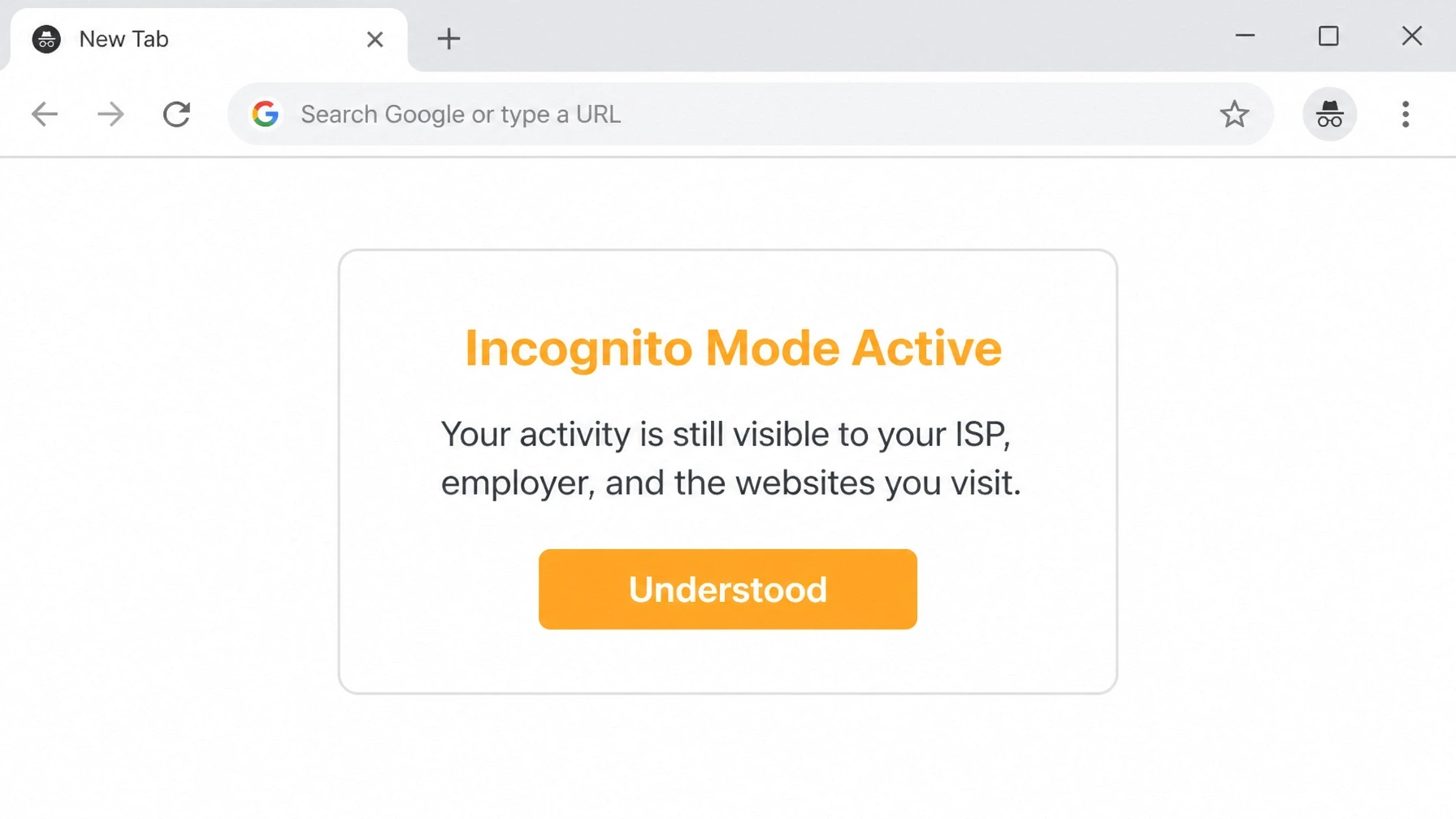
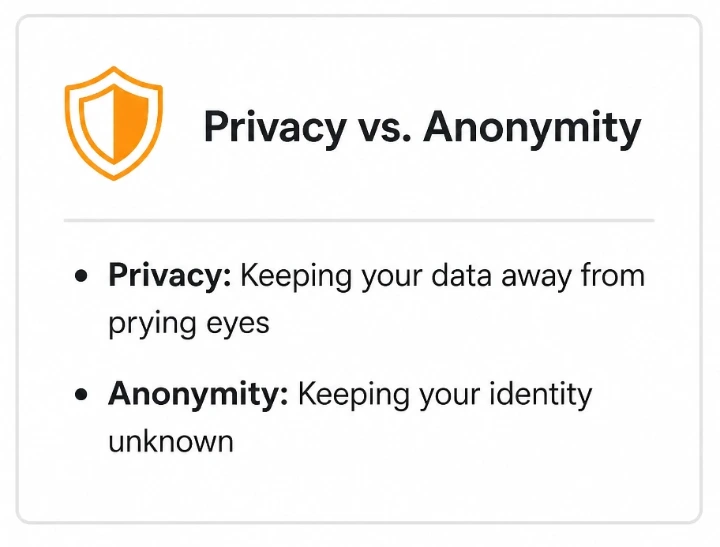
Incognito Mode does give you privacy, but only in a very specific sense. It keeps activity off your device. It does not hide you from the internet.
What Incognito Mode Actually Does
At its core, Incognito Mode is about local privacy. It changes how your browser handles data on your machine, not how the internet sees you.
When you open a private window:
Your browsing history is not saved to the device.
Cookies and site data are deleted when the session ends.
Autofill and form entries are not stored.
This is useful for shared computers, testing websites, or logging into multiple accounts at once. It solves practical problems, but only at the device level.
Where the Protection Stops
The moment your traffic leaves your computer, Incognito Mode is no longer doing anything for you. Websites can still see your IP address. If you log into an account, they know exactly who you are. Your internet provider can still see the domains you connect to. And if you are on a company device or network, your organization can still monitor activity through its security tools.
So while your browser forgets what you did, the rest of the world does not.
The Risk: A False Sense of Security
The issue is not that Incognito Mode exists. It is that people tend to overestimate what it does.
When someone believes they are hidden, their behavior changes. They might click on something they would normally avoid. They might download a tool without thinking it through. They might log into a business account from a device or network that is not properly secured.
None of that feels risky in the moment. But this is exactly how a lot of incidents start. Not with a sophisticated attack, but with a small decision made under the assumption that no one is watching.
Why This Matters for Businesses
From an IT or security standpoint, Incognito Mode creates a blind spot if it is misunderstood.
If employees use it thinking it bypasses oversight, you lose visibility into what is actually happening on your network. That makes it harder to spot problems early. It also makes investigations more difficult when something does go wrong.
And if data is exposed, the explanation that someone was using a private window does not carry much weight. Regulations and cyber insurance providers focus on controls, monitoring, and response. Browser settings are not part of that conversation.
What About VPNs?
VPNs often come up as the next step, and they do help in certain ways.
They encrypt traffic between the user and the VPN server and can hide the user’s IP address from the destination site. That improves privacy at the network level.
But a VPN does not make risky behavior safe. If a user downloads malware, it still runs. If they enter credentials into a phishing site, those credentials are still compromised. And if they are logged into a business application, their identity is still known.
There is also a practical point here. Not all VPNs are equal, and many consumer options rely heavily on trust. You are shifting who can see your traffic, not eliminating visibility altogether.
What Actually Improves Security
Real security comes from controls that do not depend on how someone chooses to browse.
That usually includes a mix of:
DNS or web filtering to block known malicious sites before they load
Endpoint detection tools that can catch suspicious behavior after a click
Strong identity controls like multi-factor authentication
Managed browser or device policies where appropriate
Ongoing user awareness, especially around common misconceptions like this one
These layers work together. They do not rely on users getting every decision right.
The Bottom Line
Incognito Mode has its place. It is a useful feature for local privacy and clean browsing sessions.
It just is not a security tool, and it does not make you invisible.
If anything, the biggest risk is how easy it is to assume that it does.